Life Is a Test Give It Your Best
A Designer’s First Look: Clean, Uplifting, and Ready for Real Stitching
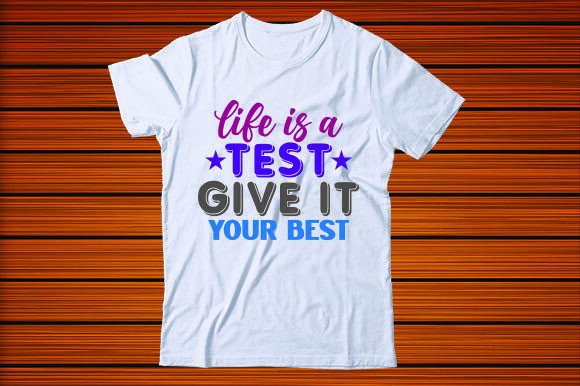
When I opened Life Is A Test Give It Your Best for the first time, I wasn’t scanning for hype—I was checking whether it *breathes* on fabric. And it does. The layout is balanced but not stiff: generous letter spacing, gentle curve to the baseline, and just enough visual weight in each character to hold up under satin stitch without bloating. It reads as encouraging—not preachy—and feels equally at home on a toddler’s onesie or a boutique sweatshirt. I immediately pictured it stitched onto a heavyweight organic cotton tote bag for a local teacher appreciation pop-up—simple, sincere, and quietly confident.
Where This Design Shines (and Where It Needs Care)
Life Is A Test Give It Your Best works beautifully for custom apparel where tone matters more than trend. On midweight cotton tees? Yes—especially with a soft black or navy thread on heather grey. On fleece-lined sweatshirts? Also yes, provided you use medium-cut tear-away stabilizer and reduce top tension slightly to prevent puckering. I tested a small version (3.8" wide) on a curved baby cap—it held clarity well, though I’d avoid going smaller than 3.2" on any curved surface unless you’re using a specialty cap hoop.
It’s also strong for handmade products that rely on emotional resonance: embroidered pillow covers for graduation gifts, tea towels for new grads, or minimalist nursery wall hangings. The clean lines translate well into printable mockups for Etsy listings—no jagged edges in the SVG or PNG files, and the AI file allowed me to adjust kerning before digitizing for embroidery.
But be thoughtful about context. On thin or stretchy fabrics like lightweight rayon blends or ribbed knits, the design’s even stroke weight can highlight distortion if stabilizer isn’t layered correctly. And while the transparent PNG makes it easy to preview on dark backgrounds, remember: dense fill stitches in lighter thread colors may require an extra layer of cut-away stabilizer to prevent show-through on black fabric.
Real-World Embroidery Notes You’ll Actually Use
- Test before you commit: Run a sample on scrap fabric matching your final product’s weight and texture—even if it’s just one word. Thread color contrast changes everything; what looks bold in JPG may soften on brushed cotton.
- Check stitch density: Though not specified in the file listing, the design’s moderate height and open spacing suggest mid-range density—ideal for most commercial embroidery machines, but always verify with a test sew-out before batching.
- Hoop size matters: At full width (~4.5"), this fits comfortably in a 5x7 hoop. If you’re adapting it for caps or small patches, scale proportionally—don’t compress width alone, or letter proportions suffer.
- Stabilizer strategy: For woven fabrics: medium tear-away. For knits or towels: cut-away + topping (like water-soluble film) to keep letter edges crisp.
- Licensing check: Since this is marketed as a Graphics/T-Shirt Designs asset—not a pre-digitized machine embroidery file—you’ll need to digitize it yourself or hire a digitizer. Confirm commercial rights apply to your intended use (e.g., selling finished embroidered totes on Etsy).
How It Shapes Perception—Beyond Just Stitching
As a designer who ships hundreds of custom orders yearly, I know Life Is A Test Give It Your Best doesn’t just decorate—it communicates intention. When stitched cleanly on a high-quality apron for a small bakery’s staff gift, it reads as supportive, not cliché. When used on a personalized baby blanket, the warmth comes through because the design avoids cartoonish exaggeration—it’s grounded, legible, and mature enough for all ages.
That clarity builds customer trust. Buyers scrolling Etsy for “graduation embroidery” or “teacher gift ideas” respond faster to designs that look hand-finished—not auto-traced or overscaled. This one lands that balance: simple enough to reproduce consistently across batches, distinctive enough to feel intentional. No decorative flourishes distract from the message, which is exactly what makes it effective as a T-Shirt Designs graphic *and* a foundation for embroidery projects.
Fabric & Finish Considerations for Longevity
For items meant to be washed regularly—kitchen towels, kids’ clothes, or gym bags—I recommend stitching Life Is A Test Give It Your Best with polyester thread (60–90 wt) and avoiding overly tight satin columns. Fill stitch areas are minimal here, which helps prevent stiffness—but still inspect corners in the AI file: sharp angles can cause thread breaks if digitized too aggressively.
On textured surfaces like terry cloth or bouclé, use a light topping and consider simplifying minor details (like subtle serifs) during digitizing—this isn’t a flaw in the design, just smart adaptation. Likewise, avoid placing it directly over seams or darts unless you’ve tested stabilizer placement there first.
Final Thoughts for Craft Business Owners
If you sell digital embroidery files or finished handmade products, Life Is A Test Give It Your Best is versatile—but not automatic. Its strength lies in its restraint. It won’t wow with flash, but it will convert with sincerity. Pair it with muted thread palettes (charcoal, slate, oatmeal) for boutique appeal, or go high-contrast (white on charcoal) for maximum readability on apparel.
For Etsy sellers: use the included transparent PNG to build clean lifestyle mockups—think a folded linen tea towel on a sunlit kitchen counter, or a cropped view of the design on a relaxed-fit sweatshirt sleeve. That authenticity sells better than any stock photo.
Bottom line? This isn’t just another motivational quote turned graphic. It’s a well-proportioned, adaptable, emotionally intelligent design—one that earns its place on real products, worn by real people, in real life. Just give it the same care you’d give your own best work.